Eric Heppner
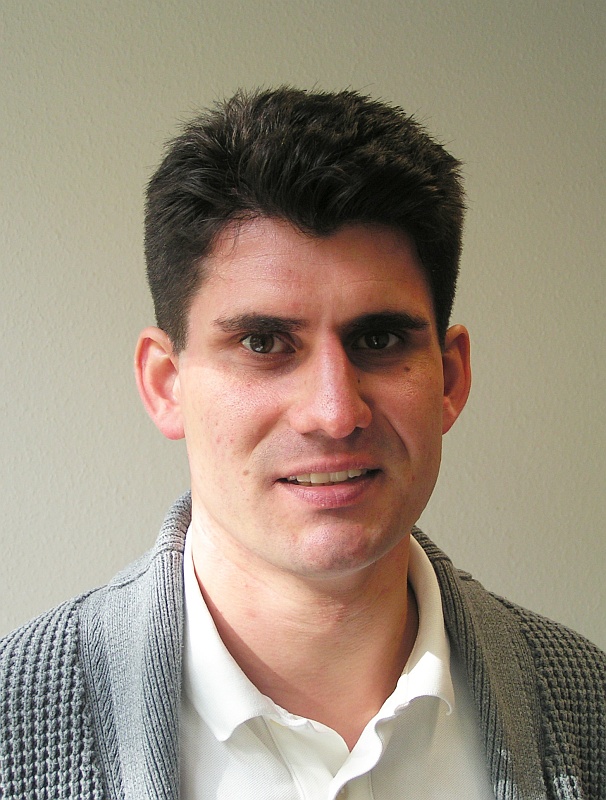
M.Sc. Eric Heppner
Mehrkörperdynamik (IWTM)
Current projects
Development of a nonlinear mesh distortion resistant simulation methodology for the friction welding process
Duration: 01.11.2025 to 31.10.2028
The friction welding is a well-established industrial joining process because it is economical, robust, precise, and reproducible.
The reasons for simulating the friction welding process are manifold in scientific and industrial contexts. It ranges from a general increase in understanding of process physics and the prediction of residual stresses to the optimization of process parameters and the development of new friction welding process variants.
Against this background, a number of different simulation approaches have been published, which differ mainly in the modeling of material behavior, friction, contact, and the solution methodology for the thermomechanical problem. A drawback of these FE-simulation approaches is that local, large deformations cannot be taken into account, or can only be considered within the context of a re-meshing of the geometries during time integration. However, in addition to the obvious increase in time and computing effort required for the discretization process itself, the re-meshing also causes significant additional effort in the solution process due to the repeated creation and inversion of the tangent matrix.
To overcome these disadvantages, an alternative approach to the usual isoparametric finite elements can be used, which uses two different types of shape functions to approximate the virtual and non-virtual field variables. As a result, an asymmetric element stiffness matrix is obtained, which is why the method is also referred to as the unsymmetric finite element method (UFEM).
It can be shown that this alternative formulation is mesh distortion resistant, even with large deformations and highly distorted elements, accurate results are generated. In this way, it is possible to avoid the problem of repeated remeshing when simulating the friction welding process, which promises significant advantages in terms of both computing time and post-processing.
Despite the development of the UFEM since the 2000s, its application to nonlinear problems remained insufficient.
As part of the project, the application of UFEM for friction welding simulations will therefore be developed and analyzed in detail, taking into account the process-specific conditions with regard to the advantages and potential disadvantages.
Completed projects
Friction-welded hybrid joints made of aluminum and steel: simulation, validation, optimization
Duration: 01.10.2018 to 30.04.2023
The declared aim of the project is the continuous implementation of the models created in the project: Friction-welded hybrid joints made of aluminum and steel: experimental investigation and phenomenological modeling. A simulation platform is being developed specifically for this purpose, in which the calculations for the process, material and structural simulation (virtual tensile test) converge incrementally. The modeling method is then critically evaluated by validating the simulated load-bearing capacity with corresponding experimental data. After successful validation, the load-bearing capacity of the hybrid joint is to be improved through targeted process optimization.
This text was translated with DeepL
Design of friction welded joints using FEM
Duration: 01.12.2019 to 31.12.2021
Friction welding is an established joining process that is used in many areas of mechanical engineering to produce hybrid structures made of aluminum and steel. The decisive factor for the serviceability of hybrid joints is above all the material-appropriate design of the joint. Due to the dependence of the welded joint on the shape, type and continuity of the intermetallic diffusion layer, the microstructure and the material bonding, the development of friction-welded hybrid structures with optimum properties is often time-consuming and cost-intensive. For kmU in particular, it is therefore almost impossible to develop such hybrid structures economically. The declared aim of the project is to set up and test a simulation for the design of friction-welded hybrid joints made of aluminum and steel. For this purpose, corresponding friction welding tests are carried out, whereby the process parameters are systematically varied. These tests provide the data basis for the experimental analysis of the macroscopic, mesoscopic and microscopic influences on the load-bearing capacity of the structure. At the same time, the tests serve as a validation basis for the simulation of the welding process itself. With the help of the process simulation, the effects of the process parameters on the process variables and thus on the material and structural properties can be derived. Based on this, corresponding phenomenological models are developed in order to map the relevant influences. These results are then used as initial conditions for the simulation of the load-bearing capacity (virtual tensile test) of the hybrid joint.
For kmU in particular, the simulation creates the economic possibility of predictively evaluating the joint depending on the selected process. Complex friction welding tasks can be analyzed in advance of the test and optimized accordingly.
This text was translated with DeepL
Al-Fe mixed construction gear - Connection optimization mixed construction gear
Duration: 01.08.2017 to 30.11.2017
The aim of the project is to develop an externally toothed gear wheel in an Al-Fe mixed construction. The inner part of the gearwheel is to be made of aluminum and welded into the steel outer ring. A friction welded joint is to be realized on the circumferential surface to ensure the safe transmission of the highest possible forces and torques. Predictive methods of friction welding simulation are used for the design of the joint geometry, which enable the process parameters to be determined, on the basis of which a multi-criteria optimization of the joining process can be carried out.
This text was translated with DeepL
2024
Peer-reviewed journal article
Model development for numerical analysis of the bonding strength for friction welded lightweight structures
Heppner, Eric; Sasaki, Tomohiro; Trommer, Frank; Woschke, Elmar
In: Finite elements in analysis and design - Amsterdam : North-Holland, Bd. 229 (2024), Artikel 104063
2023
Peer-reviewed journal article
Modellentwicklung für die prädiktive Auslegung reibgeschweißter Leichtbaustrukturen mittels FEM
Heppner, Eric; Woschke, Elmar; Schreiber, Vincent; Jüttner, Sven
In: Schweissen und Schneiden - Düsseldorf : DVS-Media GmbH, Bd. 75 (2023), Heft 1-2, S. 48-54
Deformation analysis of friction welded hybrid structures
Heppner, Eric; Glüge, Rainer; Weber, Martin; Woschke, Elmar
In: Proceedings in applied mathematics and mechanics - Weinheim : Wiley-VCH, Bd. 22 (2023), Heft 1, Artikel e202100206, insges. 2 S.
2022
Peer-reviewed journal article
A framework for modelling the manufacturing process of friction welded lightweight structures
Heppner, Eric; Woschke, Elmar
In: Finite elements in analysis and design - Amsterdam : North-Holland, Bd. 205 (2022), Artikel 103751
Book chapter
Modellentwicklung zur Vorauslegung von reibgeschweißten Aluminium-Stahl Hybridverbindungen durch ganzheitliche Abbildung der Verbindungsbildung mittels FEM
Heppner, Eric; Woschke, Elmar; Schreiber, Vincent; Jüttner, Sven
In: DVS Congress 2022 , 2022 , 1. Auflage 2022 - Düsseldorf : DVS Media GmbH, S. 216-222 - (DVS Berichte; Band 382) [Kongress: DVS Congress 2022, Koblenz, 19. -21. September 2022]
2021
Peer-reviewed journal article
Framework for modelling the elastoplastic behaviour of friction welded lightweight structures under tension
Heppner, Eric; Glüge, Rainer; Weber, Martin; Woschke, Elmar
In: Proceedings in applied mathematics and mechanics - Weinheim [u.a.] : Wiley-VCH, Bd. 20 (2021), Heft 1, Artikel e202000262, insges. 2 S. [Special Issue: 91st Annual Meeting of the International Association of Applied Mathematics and Mechanics (GAMM)]
2018
Article in conference proceedings
Modelling approach to the microstructure simulation in pure Aluminium during the RFW process
Heppner, Eric; Woschke, Elmar
In: Proceedings of the 12th International Seminar 'Numerical Analysis of Weldability', held from September 23 to 26, 2018 at Schloss Seggau near Graz, Austria / International Seminar Numerical Analysis of Weldability , 2018 - Graz : Verlag der Technischen Universität Graz, insges. 12 S. [Workshop: 12th International Seminar 'Numerical Analysis of Weldability', held from September 23 to 26, 2018 at Schloss Seggau near Graz, Austria]
2017
Book chapter
Validierung eines kalibrierten Simulationsmodells des Rotationsreibschweißprozesses mit Hilfe eines experimentellen Prozessabgleichs
Körner, Markus; Schmicker, David; Rößler, Christoph; Heppner, Eric; Jüttner, Sven; Woschke, Elmar; Trommer, Frank
In: 13. Magdeburger Maschinenbau-Tage 2017 , 2017 - Magdeburg : Universitätsbibliothek ; Kasper, Roland, S. 380-391 [Konferenz: MMT2017]
Article in conference proceedings
Anwendungsfälle der Reibschweißprozesssimulation
Körner, Markus; Schmicker, David; Paczulla, Stefan; Rößler, Christoph; Heppner, Eric; Jüttner, Sven; Woschke, Elmar
In: Digital Engineering technischer Systeme / IFF-Wissenschaftstage , 2017 - Magdeburg : Fraunhofer Institut für Fabrikbetrieb und -automatisierung IFF, S. 149-157 [Tagung: 20. IFF-Wissenschaftstage, Magdeburg, 21.-22. Juni 2017]
Beitrag zum Verständnis des Bindemechanismus rotationsreibgeschweißter Verbindungen
Heppner, Eric; Rößler, Christoph; Woschke, Elmar
In: 22. Erfahrungsaustausch Reibschweißen, 21. März 2017 , 2017 - München : GSI Gesellschaft für Schweißtechnik International, Niederlassung SLV München ; Erfahrungsaustausch Reibschweißen (22.:2017), insges. 6 S. [Tagung: 22. Erfahrungsaustausch Reibschweißen, 21. März 2017, München]
2009-2012 | Bachelorstudium Maschinenbau Vertiefungsrichtungen Mechanik und Produktstechnik an der Otto-von-Guericke-Universität Magdeburg | |
2012-2014 | Hilfswissenschafter am Institut für Mechanik (IFME) | |
2012-2015 | Materstudium Maschinenbau | |
| Gastaufenthalt an der Universität Niigata, Japan | |
2016-2022 | Wissenschaftlicher Mitarbeiter am IFME, |
2016 Gastaufenthalt an der Universität Niigata, Japan
seit 2022 Wissenschaftlicher Mitarbeiter am Fraunhofer ISE